

If you are asking what is an llms.txt file and whether llms.txt is worth it, you are not alone, more and more website owners are trying to ensure their content is easily discovered and understood by AI tools, not just human visitors and traditional search engines.
As AI assistants, coding agents, and AI-powered search engines become a standard way people find information, understanding how to prepare your site for these systems is fast becoming a priority.
That question is why the llms.txt file has attracted so much attention. It proposes a simple way to help compatible AI agents identify the most important information on a website. For anyone searching for “llms.txt file what is it,” the idea sounds appealing: publish one file, point AI systems to your best content, and make your site easier to work with.
But the more useful question is not whether the idea is clever. It is whether every website needs this file, or whether its practical value depends on the website’s purpose, structure, and intended use. A technology’s intended purpose does not automatically make its implementation necessary.
In this article, we will look at what llms.txt is designed to do, what is actually known about its usefulness, and when implementing it makes practical sense. If you have been asking yourself whether llms.txt is worth it, the answer depends on your situation, and the rest of this guide will help you decide.
What Is llms.txt file and What Is It Supposed to Do?
The llms.txt file is a proposed convention for websites. The idea is to place a file named llms.txt at the root of a website (for example, example.com/llms.txt) so that compatible AI agents know where to look for a curated overview of the site.
The file is written in Markdown. Instead of listing every page, it typically offers a short description of the website followed by a selection of important pages, each with a link and a brief explanation of what it contains. Think of it as a hand-picked table of contents written for machines rather than a complete inventory of your site.
The intended benefit is efficiency. A website can contain thousands of pages, many of them navigation elements, duplicates, or content that is not useful for a particular task. A curated index could help a compatible AI agent identify the relevant pages faster, without having to work out the site’s structure on its own.
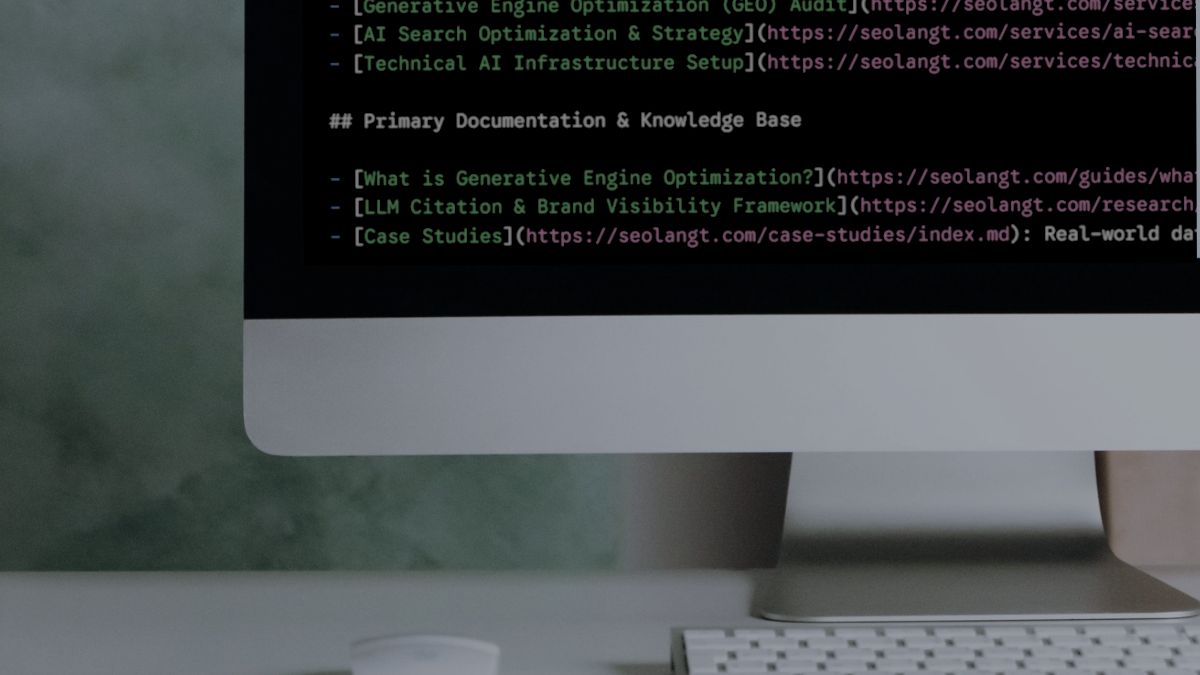
An explanation of how the llms.txt file helps compatible AI agents navigate website content
How llms.txt Differs From Other Website Files
It helps to separate llms.txt from files and markup you may already know:
- txt tells crawlers which parts of a site they may or may not access. It is about permissions, not about recommending content.
- xml lists the URLs on a site so search engines can discover them. It is comprehensive and designed for search engine crawlers.
- Structured data (such as Schema.org markup) describes the meaning of specific content on a page, such as a product, an article, or an organization.
- txt is a proposed, human-readable and machine-readable overview that highlights selected pages and explains them briefly.
Each of these serves a different purpose, and none of them replaces the others.
A Proposal, Not A Universal Standard
It is important to be clear about what llms.txt is not. It is a proposed technical convention, not a requirement that every AI system follows. Different AI systems handle website information in different ways, and a file existing at your site’s root does not mean any given system will read it. Whether the file does anything useful depends on whether the tools you care about actually look for it.
Does llms.txt Actually Help AI Systems Access Your Website?
This is where we need to separate what a file is designed to do from what has been demonstrated to happen.
Intended functionality versus demonstrated benefit
In theory, llms.txt can help a compatible AI agent find the right pages. In practice, publishing the file does not guarantee that AI crawlers, assistants, or search systems will retrieve it, read it, or use it in generating answers. A convention only works when the systems it is meant for choose to support it.
Agent workflows versus AI search visibility
Two different claims are often blended together, and they should be kept apart:
- Potential use in compatible AI-agent workflows. For example, a coding assistant that is configured to read an txt file when working with a particular developer documentation site. This is a plausible, specific use.
- Improved visibility in AI-powered search. The belief that having an txt file makes your website more likely to be cited, ranked, or recommended by AI search products. This is a much bigger claim, and it is not established by the available evidence.
The first is a narrow technical use case. The second is a marketing promise that has not been demonstrated.
What Google has said about llms.txt file
Google’s position is that llms.txt is not required for visibility in Google Search or its AI search features. Google has indicated that the fundamentals of good search practice, such as helpful content, accessible pages, and clear site structure, are what matter, and that no special file is needed to appear in AI features in Search.
To learn more you might watch this official Google Search Central episode, discuss whether converting website pages to Markdown or publishing an llms.txt file is worth the effort for Search engine optimization (SEO). They conclude that llms.txt is not required for Google Search or AI features in Search.
What website owners can reasonably conclude
Given what is known today, a sensible reading is:
- txt should not be treated as a guaranteed ranking factor.
- It should not be treated as a citation signal or a shortcut to being recommended by AI assistants.
- Its value depends on the specific problem it is meant to solve and the specific systems expected to use it.
So whether the file is worth implementing is not a question you can answer from hype or from how simple the file is. You answer it by asking what problem you are trying to solve, and which systems will actually consume the file.
What Are The Costs and Limitations Of llms.txt?
Even a small file has costs, and it is worth looking at them honestly before deciding.
Implementation and maintenance
Creating an llms.txt file means deciding which pages are truly important, writing short and accurate descriptions, checking that every link works, and keeping the file up to date as your site changes.
The workload differs a lot depending on the website. A small site with a handful of key pages can produce and maintain the file in a short time. A large site with frequently changing documentation, products, or articles needs a process to keep the index accurate, otherwise the file slowly becomes outdated or points to pages that no longer exist.
The file can be relatively simple to create, but ease of implementation alone does not establish value. Something being quick to do is not a reason to do it.
Uncertain adoption and benefits
The usefulness of the file depends partly on whether relevant AI agents or workflows actually consume it. There is no universal requirement for it, and there is no established evidence that publishing the file alone improves general AI search visibility.
It is worth distinguishing a plausible technical benefit from a demonstrated business or visibility outcome. A file can make technical sense and still produce no measurable result for your business.
At the same time, a lack of proven search benefits does not mean the file has no possible use. It may be genuinely helpful in other AI workflows, such as agents built to read documentation. The honest position is uncertainty in both directions: it is not proven to help search visibility, and it is not proven to be useless everywhere.
Opportunity cost
Every hour spent on one task is an hour not spent on another. Website owners should ask what else they could improve with the same time and resources, such as fixing broken pages, improving content quality, clarifying service descriptions, or making key information easier to find.
A relatively easy task is not automatically more valuable than a more fundamental improvement. The decision should come from your website’s actual needs, not from the popularity of an emerging technical convention.
Which Websites Should Consider Using llms.txt file?
The following are potential use cases, not categories guaranteed to benefit. The key consideration is whether a curated index solves a specific information-discovery problem for your website.
Technical documentation and API references
Websites with extensive documentation, developer resources, or API references are the most commonly discussed candidates. When an AI coding agent needs to find the right section of a large documentation site, a curated index could help it identify relevant pages quickly instead of navigating a complex structure.
The value, however, depends on the agents and workflows involved. If the tools your developers’ audience uses do not read the file, the benefit is limited. It is worth checking which tools your users actually rely on.
Large knowledge bases and resource libraries
Sites with large collections of guides, reference material, or specialized resources may also have a reason to consider the file. A curated index could make important sections easier for compatible agents to locate.
Before implementing it, consider whether your existing navigation, documentation structure, and content accessibility already solve the problem. If your site is already well organized and easy to crawl, an additional index may add little.
Websites with a specific AI-agent workflow
Some website owners have identified particular AI agents or automated workflows that can use the file, for example an internal assistant, a partner integration, or a known tool that supports llms.txt. A known use case is a much stronger reason to implement the file than a general desire to improve AI visibility.
If this describes you, evaluate whether the file addresses a real information-discovery need, and define what success looks like.
Websites running a controlled experiment
Some owners simply want to find out whether the file is useful in practice. That is a reasonable motivation, provided you approach it carefully:
- Define the intended outcome before you implement the file.
- Decide in advance how you will measure it.
- Evaluate results cautiously. Changes in AI visibility, citations, or traffic should not automatically be attributed to txt, since many other factors change at the same time.
Which Websites Can Probably Skip llms.txt?
Wanting to be discovered by AI systems does not automatically mean your website needs an additional technical specification. The decision depends on a few questions:
- Does your website have a specific use case for the file?
- Is your existing information already accessible and well organized?
- Do more fundamental improvements deserve attention first?
Small business websites, professional portfolios, blogs, and conventional e-commerce websites are examples of sites that may have no immediate need for llms.txt, particularly when their main objective is general search visibility or helping visitors understand what they offer. For these sites, clear pages, accurate information, and good structure typically matter far more than an optional index file.
An additional index also cannot compensate for deeper problems. It will not fix inaccessible content, a confusing website structure, broken links, or inadequate information. If those issues exist, a curated list of links to them will not help.
Skipping the file is also not a permanent decision. These websites are not excluded from using it. If a relevant use case emerges later, such as a supported tool your audience uses or a documentation section that grows large, you can reconsider.
The principle is straightforward: if the file does not address an identifiable problem, and more important website improvements remain, skipping it is reasonable.
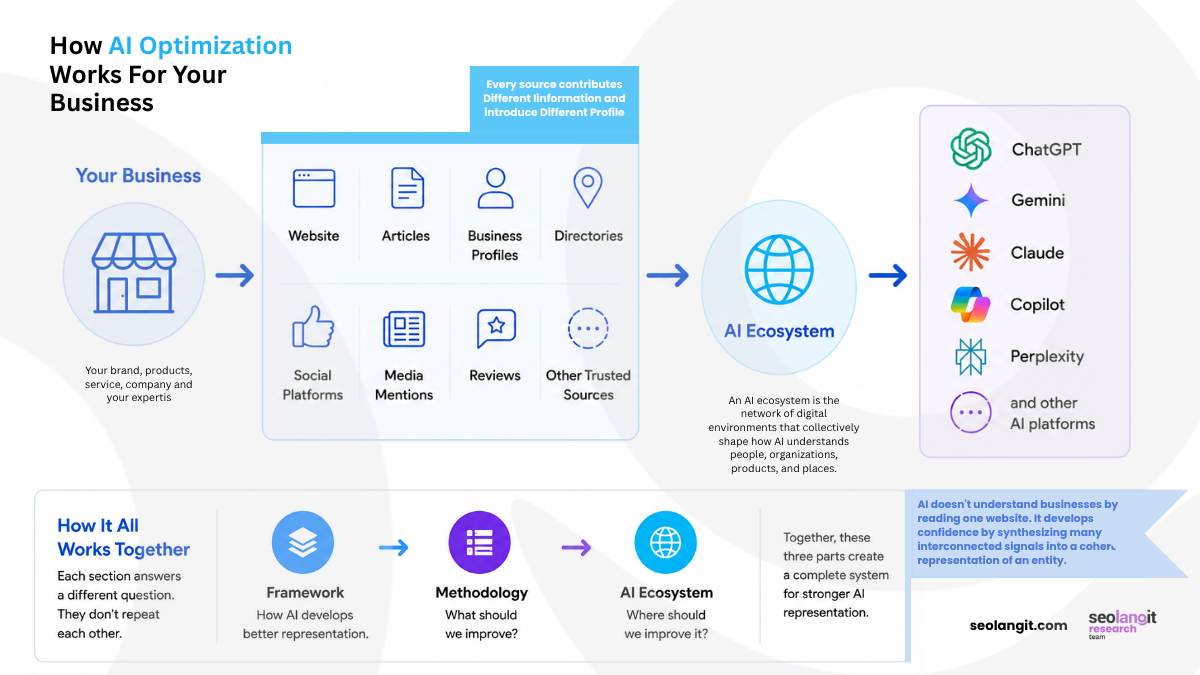
AI develops its confidence by synthesizing many interconnected signals into a coherent representation of an entity.
What Should You Prioritize Before Implementing llms.txt?
Think of the following as a prioritization framework rather than a checklist every website must complete in exactly the same way. The right priorities depend on your website’s purpose and current condition.
01. Make important content accessible
Make sure your important pages can be crawled and accessed by the systems that matter to you, subject to appropriate access controls. Identify and fix technical barriers that stop useful content from being discovered or retrieved, such as blocked resources, content hidden behind scripts that fail to load, or pages that cannot be reached through normal links.
02. Organize website information clearly
Use descriptive page titles, meaningful headings, logical navigation, and relevant internal links. Your important pages and the relationships between them should be understandable to both visitors and automated systems. Good structure helps everyone, including any AI system that reads your site.
03. Provide accurate and consistent business information
Explain clearly who your organization is, what services you offer, what expertise you have, and any other relevant details. Keep this information accurate and consistent across your website and relevant external sources, such as business profiles and directories. A clear and consistent representation of your business is a more fundamental objective than publishing an optional index file. If AI systems are going to describe your business, they need correct and consistent information to draw from.
04. Use structured data where appropriate
Implement suitable structured data that accurately reflects the visible content on your pages. Structured data helps search engines and other systems understand what a page is about, such as a product, an article, an event, or an organization. Its role is distinct from llms.txt, and it should not be presented as a guarantee of search rankings or AI recommendations. It is a way to describe your content clearly, not a shortcut to visibility.
05. Evaluate AI visibility realistically
Before choosing additional technical measures, assess how accurately relevant AI systems represent your business or content today. Look for information gaps and opportunities for improvement. If you want you might test how AI recommend your website
When you make changes, avoid attributing shifts in visibility, citations, or recommendations to a single implementation without supporting evidence. Tie each improvement to an identifiable objective and a way to evaluate the outcome. That discipline will tell you far more than any single file will.
Final Verdict: Should You Implement llms.txt file?
To summarize: the llms.txt file is a proposed convention with a clear intended purpose, which is to help compatible AI agents find important information on a website. Its demonstrated practical value, however, is much narrower than the enthusiasm around it suggests.
Consider implementing it when:
- You have a specific use case, such as a large documentation site or a defined AI-agent workflow.
- There is a compatible system that can actually use the file.
- You have a reasonable basis for expecting it to be useful, and a way to check whether it was.
Skip it for now when:
- Your only motivation is a belief that it is required for Google rankings or general AI search visibility. It is not required for Google Search or its AI features.
- More fundamental improvements to your content, structure, or business information are still waiting.
The best approach is to prioritize improvements according to your website’s actual needs, rather than adopting every emerging technical convention as it appears.
So, is llms.txt worth it? It depends on your site. llms.txt is an optional tool to evaluate against your website’s needs, not a universal requirement for every website.

Leave a Reply